> For the complete documentation index, see [llms.txt](https://docs.alkemi.ai/llms.txt). Markdown versions of documentation pages are available by appending `.md` to page URLs; this page is available as [Markdown](https://docs.alkemi.ai/documentation/getting-started/connect-your-data/connecting-snowflake.md).
# Connecting Snowflake
Connect your Snowflake workspace to the Alkemi platform. Once connected, you can create and manage Data Products within Alkemi using your Snowflake database as the data source.
{% stepper %}
{% step %}
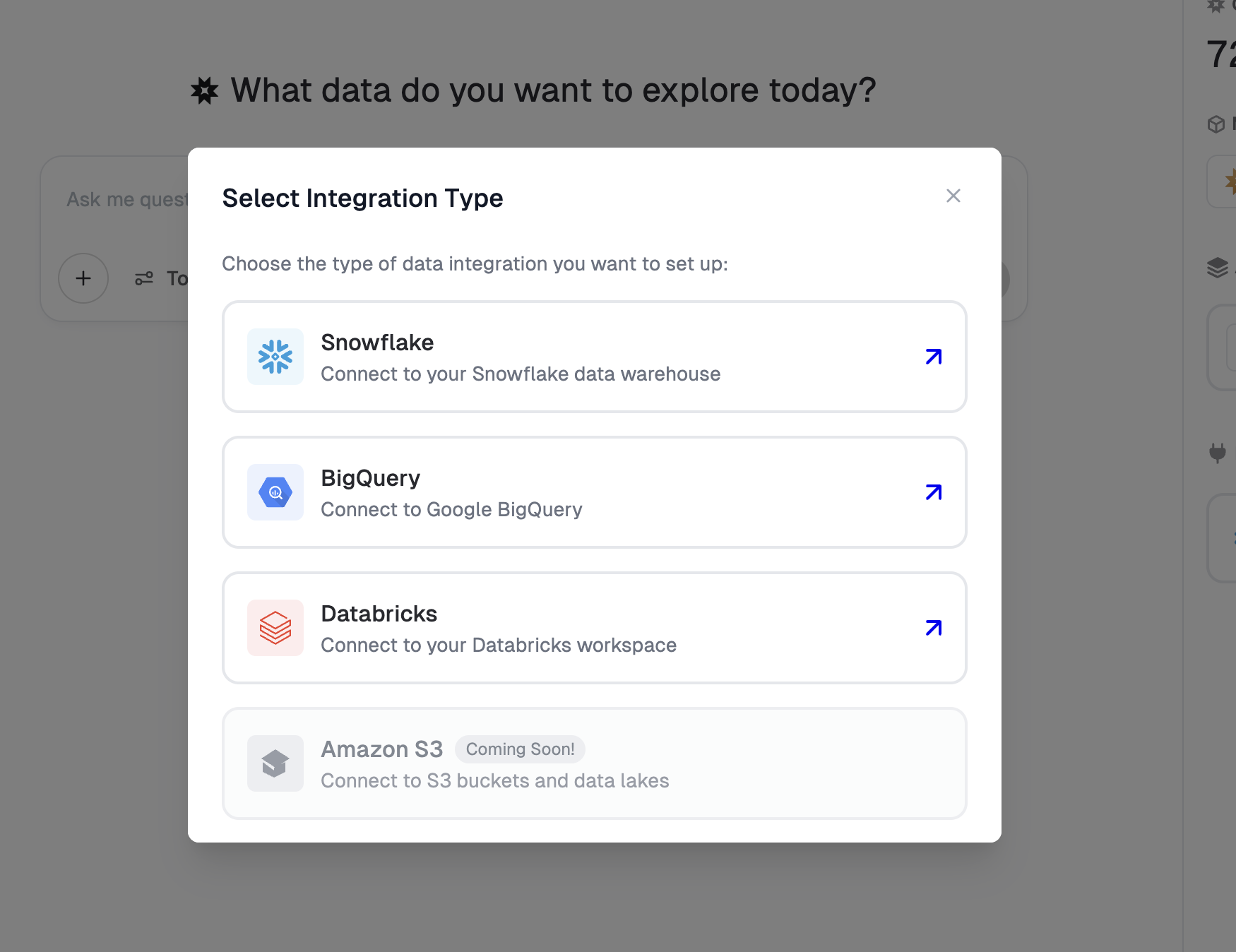
## Click +Add under integrations
Click the **Add** button and select Snowflake.
{% endstep %}
{% step %}
## Input a Connection Name and your Snowflake Account ID
Input a name for your connection. Then In another tab, go to your account in Snowflake to obtain your Account ID.
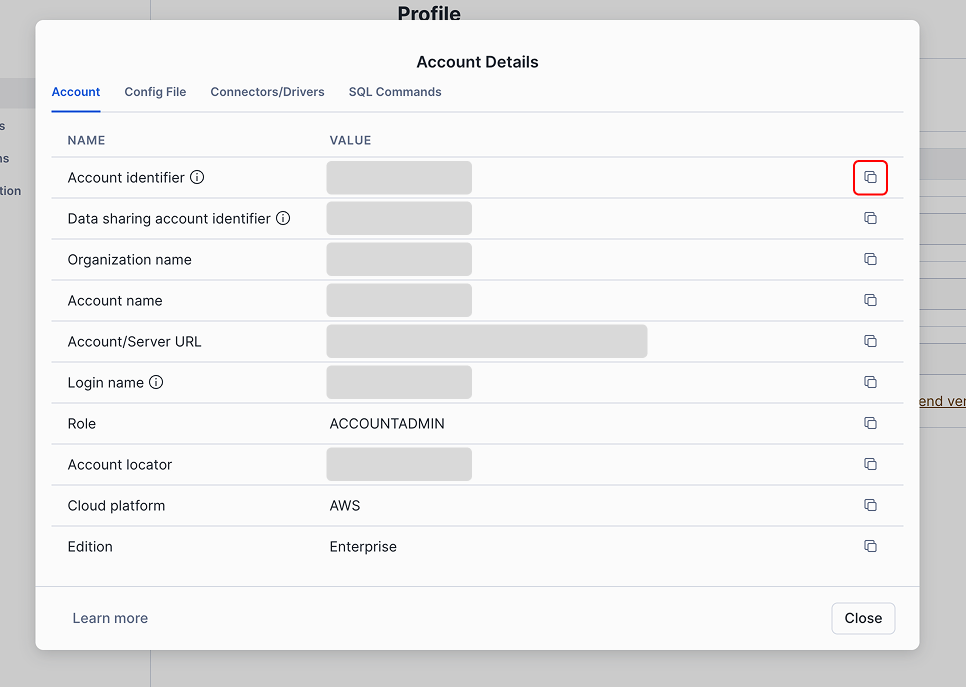
To find your account ID, in Snowflake click your username in the lower left and navigate to **Account > View Account Details**.
Copy the **Account identifier** to your clipboard and paste into the **Account ID** field in the integration form in DataLab.
{% endstep %}
{% step %}
### Create a new user for Alkemi in Snowflake (recommended)
For added security, it's recommended that you create a service user in Snowflake for your DataLab connection. In the form we provide a guide with SQL that you can run in a Snowflake workspace to create the user and roles. Expand the guide to view the generated SQL.
In Snowflake, navigate to **Projects > Workspaces** and add a new SQL file.
Copy and paste the SQL from the guide into this new file. This includes a unique public key that DataLab has generated for this connection. Replace database\_name and schema\_name in the SQL with your database and schema details. Now click the **Run** button to create the user.
{% endstep %}
{% step %}
### Enter your Snowflake Username, Role, and Warehouse
Make sure these match what you created in Step #3.
{% endstep %}
{% step %}
### Test and Save your connection
Alkemi will let you know if it encounters any connection issues.
{% endstep %}
{% step %}
### Start creating data products!
Begin creating data products in DataLab for text-to-SQL on your Snowflake data, and enable MCP connections to your data in chat clients such as Claude, Cursor, and ChatGPT. For more details, see "Creating a Data Product."
{% endstep %}
{% endstepper %}