> For the complete documentation index, see [llms.txt](https://docs.alkemi.ai/llms.txt). Markdown versions of documentation pages are available by appending `.md` to page URLs; this page is available as [Markdown](https://docs.alkemi.ai/documentation/getting-started/connect-your-data/connecting-bigquery.md).

# Connecting BigQuery

{% stepper %}
{% step %}

### Click +Add under integrations

Click the **Add** button and select BigQuery.

<figure><img src="/files/y2TyONkxtnmQQP6gCZg9" alt=""><figcaption></figcaption></figure>

<figure><img src="/files/dlCDLgOa6yhdA2jL0oaB" alt=""><figcaption></figcaption></figure>
{% endstep %}

{% step %}

### Create a Google Cloud Service Account <a href="#input-a-connection-name-and-your-snowflake-account-id" id="input-a-connection-name-and-your-snowflake-account-id"></a>

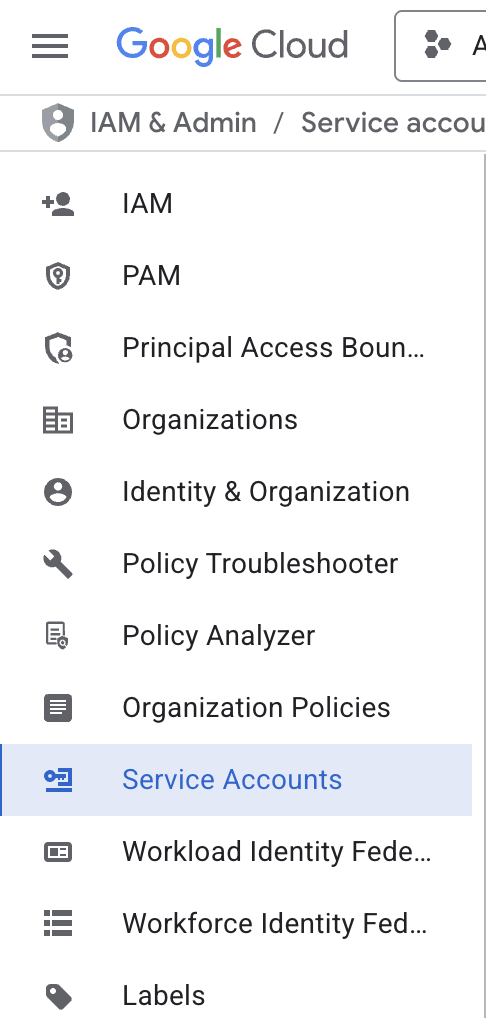
Go to the IAM & Admin section of Google Cloud

<figure><img src="/files/Wl8t5P9cCACmteKw0DLx" alt="" width="563"><figcaption></figcaption></figure>

And go to the Service Users sub-section

<figure><img src="/files/eTlbLYfgX6ho8DIxbfCi" alt="" width="243"><figcaption></figcaption></figure>

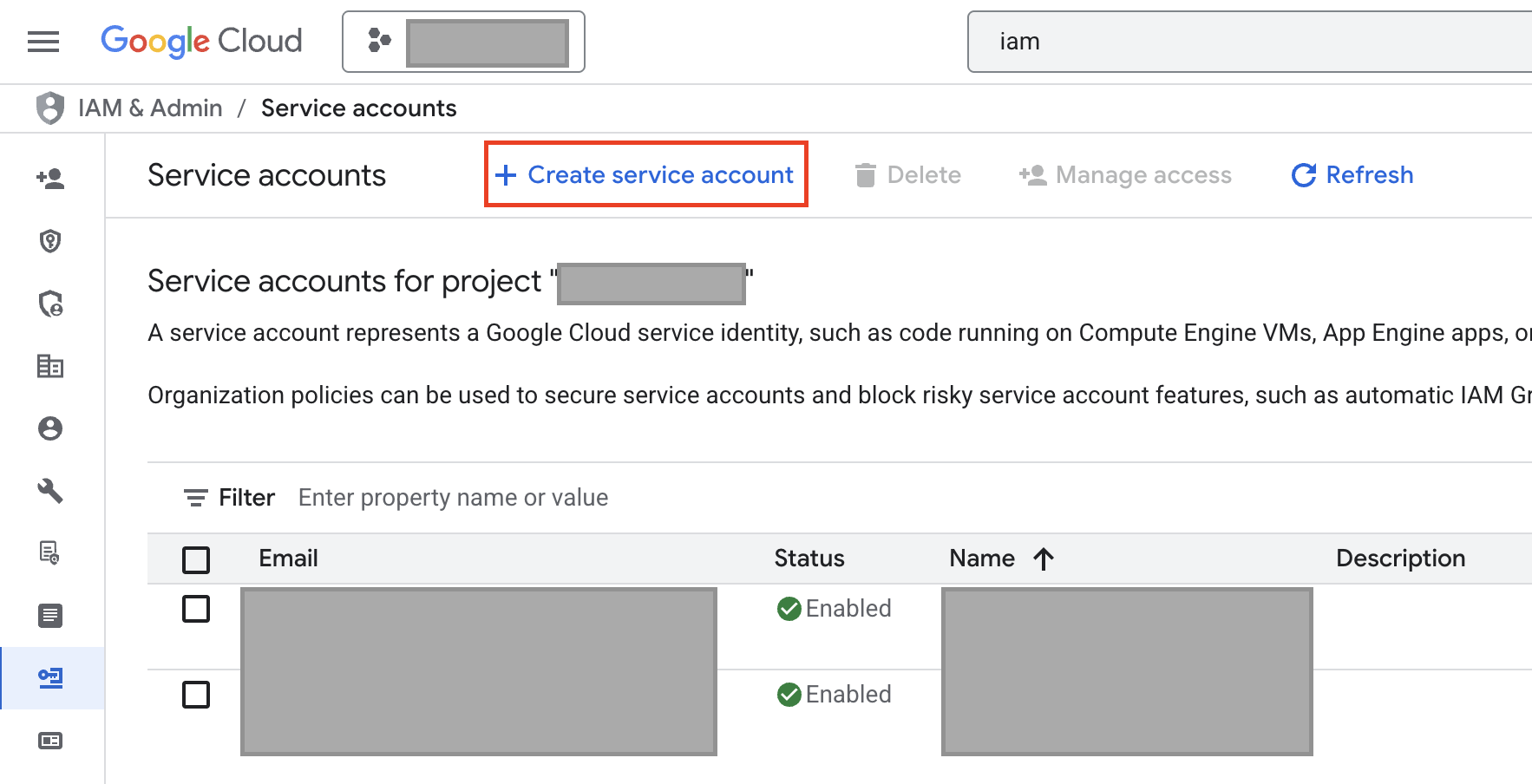
Create a new Service Account

<figure><img src="/files/vVaaSCbr4y1S0rLuFcpC" alt="" width="563"><figcaption></figcaption></figure>

Add a name that will tell you later what it is and click "Done"

<figure><img src="/files/lnJ8lS1sHHrrl7V8TJqi" alt="" width="563"><figcaption></figcaption></figure>

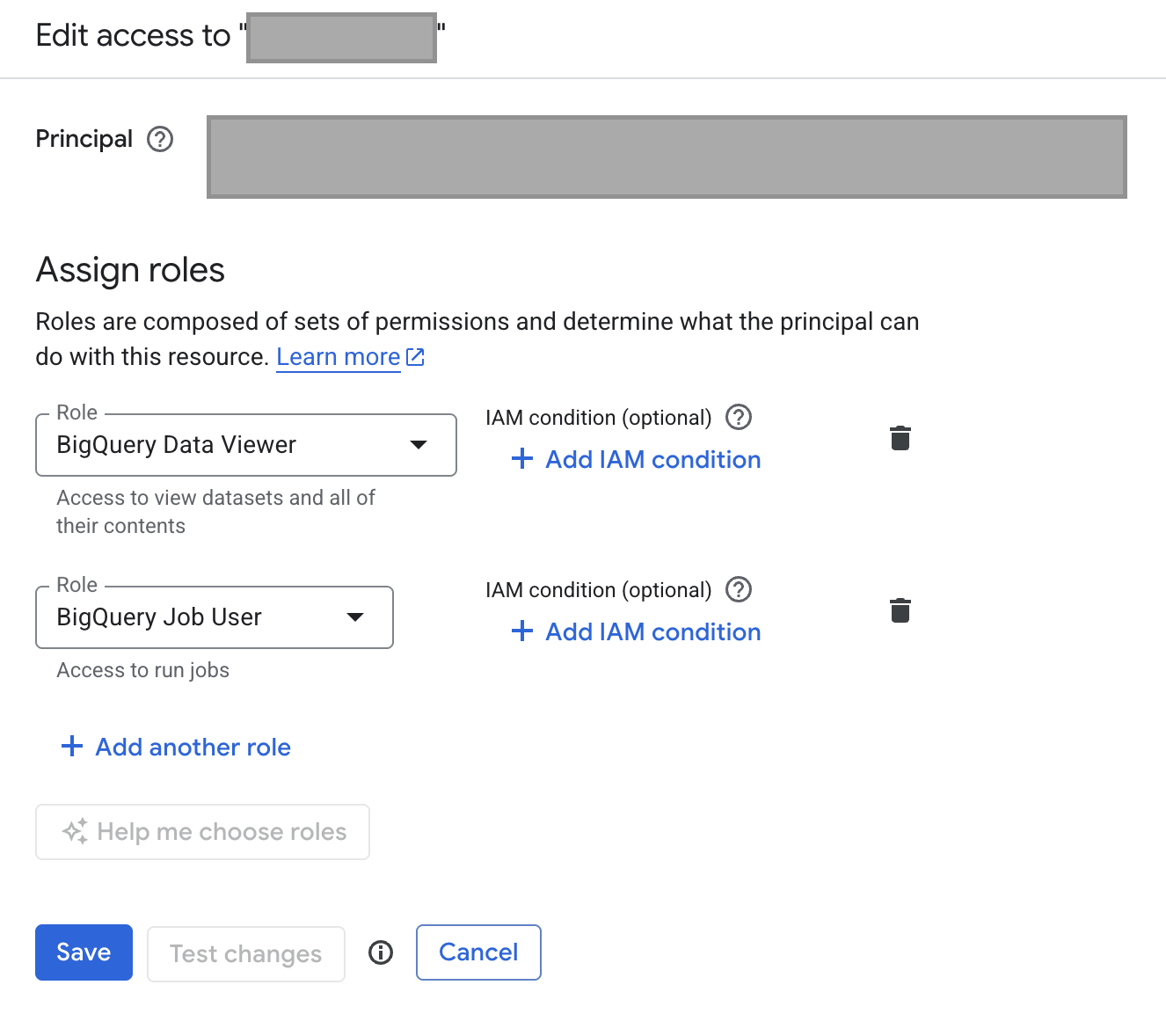
Add Permissions

<figure><img src="/files/OlQsMdibXh8WZi9NhkzD" alt="" width="563"><figcaption></figcaption></figure>

And create and download a JSON key

<figure><img src="/files/EkqV3PX7sp0RVGmw1J1p" alt="" width="375"><figcaption></figcaption></figure>
{% endstep %}

{% step %}

### Gather BigQuery DataSet Information <a href="#input-a-connection-name-and-your-snowflake-account-id" id="input-a-connection-name-and-your-snowflake-account-id"></a>

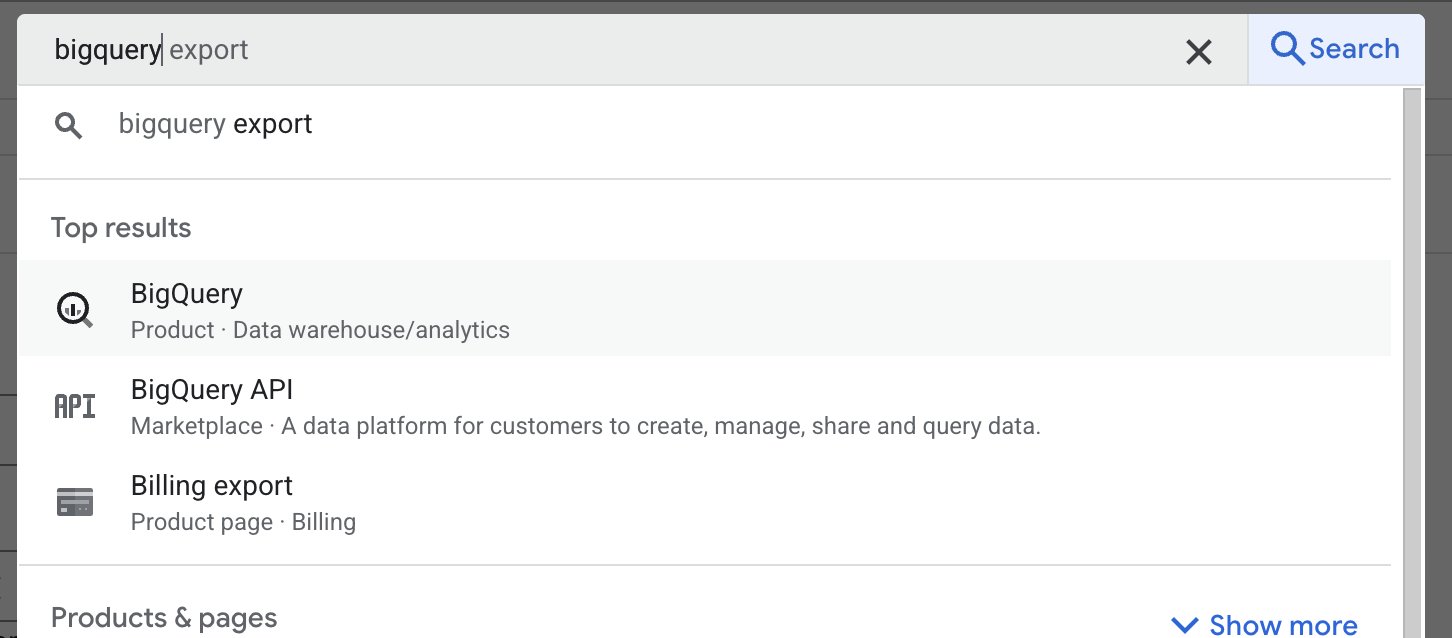
Go to the BigQuery Console

<figure><img src="/files/9thU9J0Xcn12JfU6qpnk" alt="" width="375"><figcaption></figcaption></figure>

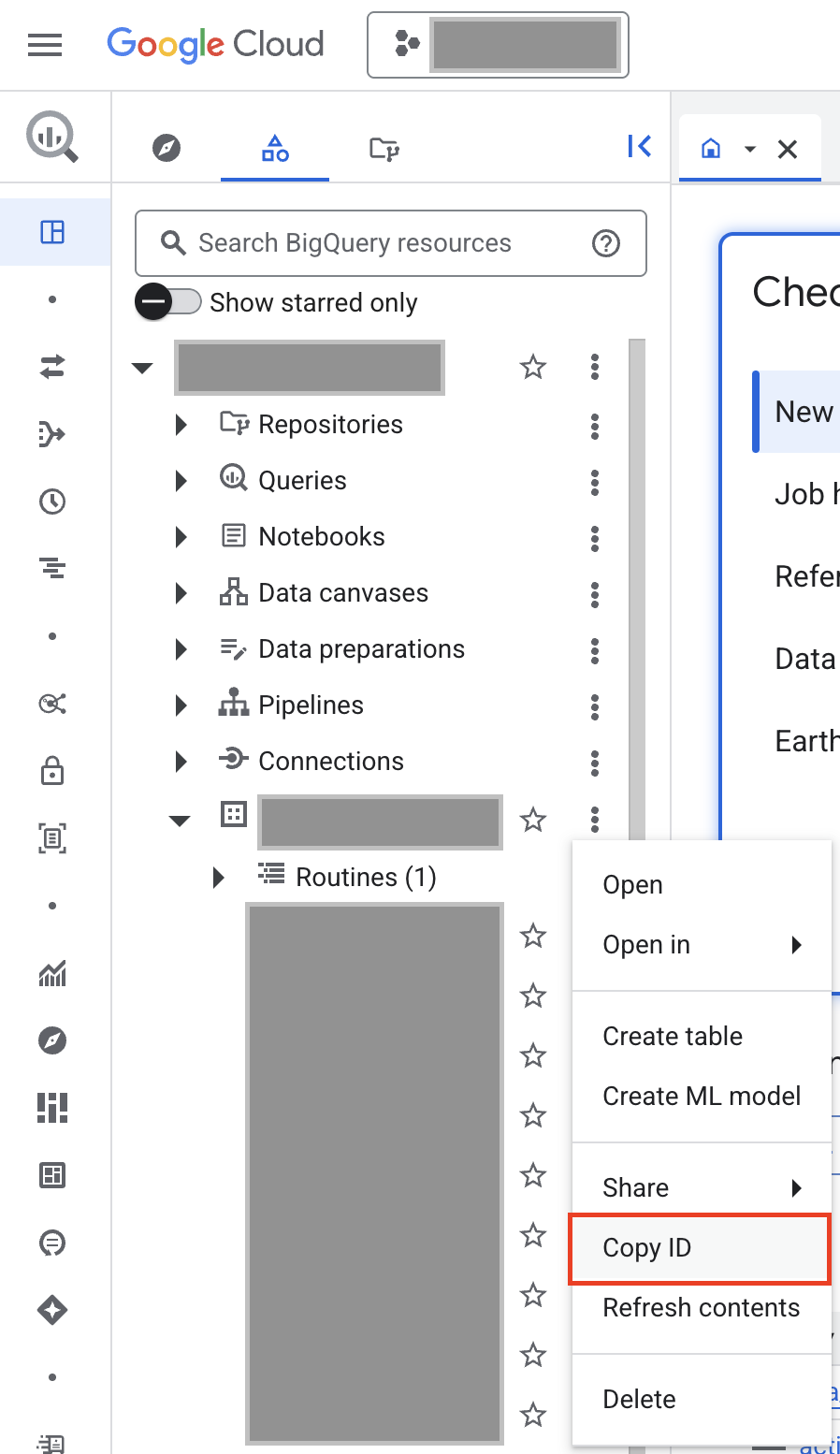
Select your DataSet and copy the ID of it

<figure><img src="/files/7qjcY0k6X0q9zFgfXZVs" alt="" width="375"><figcaption></figcaption></figure>

The ID is in the format of \[PROJECT\_ID].\[DATASET\_ID]
{% endstep %}

{% step %}

### Add Information to Alkemi <a href="#input-a-connection-name-and-your-snowflake-account-id" id="input-a-connection-name-and-your-snowflake-account-id"></a>

Use the first part of the DataSet ID, separated by a dot, as the Project ID. The second part is the Dataset ID. And copy in the contents of the JSON file for the secret key.

<figure><img src="/files/o7DdnCw9xHOlSQP6xYpW" alt="" width="375"><figcaption></figcaption></figure>
{% endstep %}

{% step %}

### Test and Save your connection <a href="#test-and-save-your-connection" id="test-and-save-your-connection"></a>

Click Test Connection and resolve any issues before clicking Save Connection
{% endstep %}

{% step %}

### Start creating data products! <a href="#start-creating-data-products" id="start-creating-data-products"></a>

Explore the creation of data products in DataLab for generating text-to-SQL queries on your BigQuery datasets. Enable MCP connections to integrate your data with chat clients like Claude, Cursor, and ChatGPT. For further information, refer to "Creating a Data Product.
{% endstep %}
{% endstepper %}

[<br>](https://open-2v.gitbook.com/url/preview/site_ybgqm/documentation/~/revisions/qNEJ8ULA5Br3aoLGqIDl/getting-started/connect-your-data/connecting-databricks)<br>


---

# Agent Instructions
This documentation is published with GitBook. GitBook is the documentation platform designed so that both humans and AI agents can read, navigate, and reason over technical content effectively. Learn more at gitbook.com.

## Querying This Documentation
If you need additional information that is not directly available in this page, you can query the documentation dynamically by asking a question.

Perform an HTTP GET request on the current page URL with the `ask` query parameter:

```
GET https://docs.alkemi.ai/documentation/getting-started/connect-your-data/connecting-bigquery.md?ask=<question>
```

The question should be specific, self-contained, and written in natural language.
The response will contain a direct answer to the question and relevant excerpts and sources from the documentation.

Use this mechanism when the answer is not explicitly present in the current page, you need clarification or additional context, or you want to retrieve related documentation sections.